


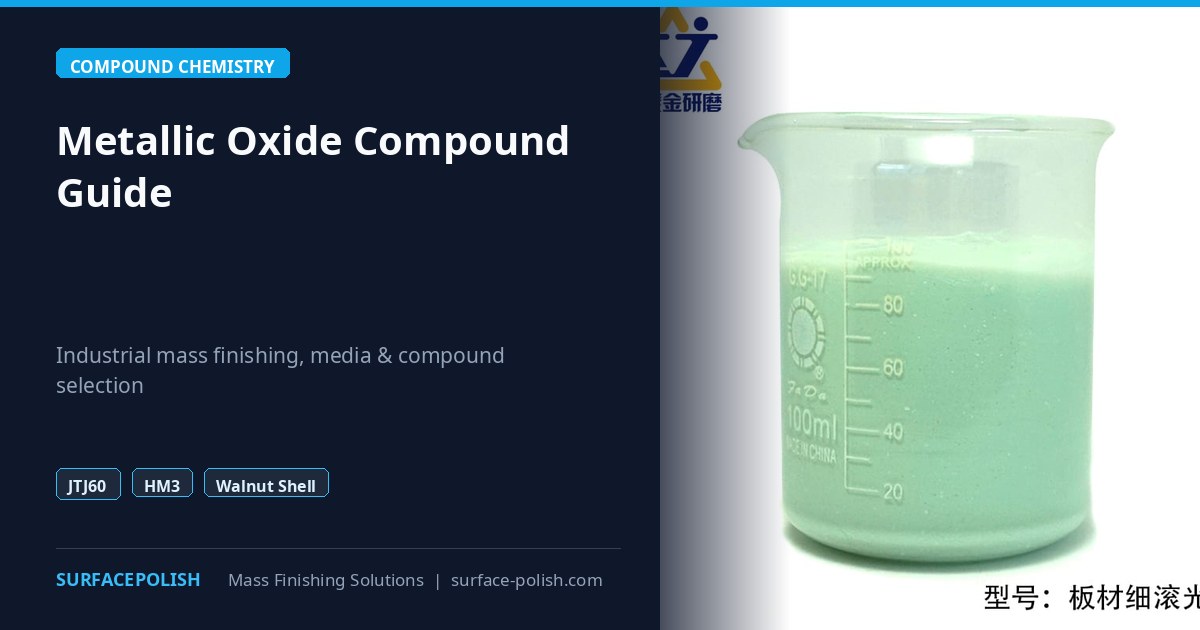
Translating traditional bench-buffing metallic oxide compound and rouge color charts into modern mass finishing chemistry is one of the fastest ways to eliminate dirty hand-polishing bottlenecks. On manual cloth buffing wheels, operators press solid wax-bound bars—black emery, brown tripoli, white alumina, green chromium oxide, and red jeweler's rouge—against parts one piece at a time. Inside automated ZL vibratory bowls, OBD-LLF120 planetary barrels, and OBD magnetic polishers, solid wax bars quickly gum up stone pores; instead, engineered liquid finishing concentrates and dry organic media (JTJ60, JTJ50, HM3, LC10, JTJ20, MC8) deliver clean, repeatable cutting and mirror burnishing across thousands of parts per shift. SurfacePolish (Xiamen Jin Tai Jin Grinding Technology Co.,Ltd.) draws on 200,000+ verified finishing trials to help shops transition cleanly from manual metallic oxide compound bars to automated liquid and dry mass finishing.

Mapping Traditional Buffing Rouge Color Charts to Mass Finishing Chemistry
Manual polishing shops rely on color-coded metallic oxide compound bars ranked from coarse black emery down to ultra-fine red ferric-oxide rouge. Understanding the functional job behind each color tier makes selecting the right mass-finishing media and liquid compound effortless.
Why Solid Wax Rouge Bars Fail Inside Wet Vibratory Bowls
Traditional buffing bars bind metallic oxide compound powders inside heavy tallow, stearic acid, and paraffin waxes designed to melt under high-speed cloth wheel friction. Dropping wax-bound bars into a wet ZL vibratory bowl coats porous ceramic media and polyurethane ribs in waterproof grease, stalling abrasive cut completely and leaving messy wax smears inside blind holes.
Translating Coarse Black/Brown Bars into Ceramic Media + LC10/JTJ20
Where bench polishers use black emery or brown tripoli bars to cut casting seams, stamping burrs, and deep CNC scratches, mass finishing separates the abrasive solid from the chemical carrier: ceramic media or resin plastic media provides the solid cutting grain, while flow-through LC10 (general deburr) or JTJ20 (stainless rough cut) tumbling compounds keep pores sharp and flush wear fines away.
Translating White/Green/Red Rouge into High-Alumina + JTJ50/JTJ60/HM3
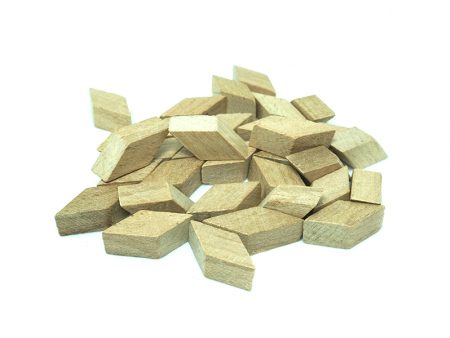
Fine white aluminum-oxide, green chrome-oxide, and red jeweler's rouge bars burnish smooth surfaces to liquid-mirror gloss. In mass finishing, dense high-alumina spheres or stainless steel balls paired with JTJ50 (stainless brightening), JTJ60 (fine metal polishing), or HM3 (brightening and OBD magnetic pin lubrication) achieve identical specular reflectivity automatically—while treated walnut shell (8#-80#) handles final dry organic luster in octagonal barrels.
| Traditional Buffing Bar Color | Bench Wheel Job & Metal Fit | Mass Finishing Solid Media Equivalent | SurfacePolish Liquid / Dry Chemistry | Automated Machine Platform |
|---|---|---|---|---|
| Black emery / coarse gray | Heavy scale, weld slag & deep burrs | Fast-cut ceramic media triangles |
MC8 descaler + LC10 / JTJ20 |
ZL bowl / L1500 trough / LLF120 |
| Brown tripoli | Aluminum, brass & zinc casting lines | Resin plastic media cones / pyramids |
HM3 or LC10 flow-through |
ZXL / ZL bowl / LLB50 disc |
| White diamond / alumina | Stainless & hard alloy pre-mirror cut | Medium/fine ceramic media or high-alumina |
JTJ60 fine metal polishing |
OBD-LLF120 / OBD-LX100B / ZL |
| Green rouge (chromium oxide) | 304/316 stainless & titanium mirror |
High-alumina spheres / 304 balls |
JTJ50 stainless brightener |
OBD-LLF120 / ZL / rotary barrel |
| Red / yellow jeweler's rouge | Brass, copper, silver & final dry gloss | Walnut shell (8#-80#) / corncob |
Dry conditioned organic polishing cream | Double-deck octagonal wood barrel |
Wet Liquid Concentrates: JTJ60, JTJ50, HM3, LC10 & MC8
Switching from manual metallic oxide compound bars to metered liquid concentrates eliminates hand-buffing variability, airborne lint-and-rouge dust, and solvent-wash cleanup downstream.

JTJ60 Fine Metal Polishing & JTJ50 Stainless Brightening
Formulated for high-clarity final stages, JTJ60 fine metal polishing solution and JTJ50 stainless brightener build a clean hydrodynamic lubricating film over high-alumina spheres and ceramic media. Instead of smearing greasy wax over micro-scratches, they suspend microscopic wear debris cleanly and burnish peaks flat for crisp, plate-ready reflectivity.
HM3 Neutral Brightening for Brass, Aluminum & OBD Magnetic Units
Soft 6061 aluminum, brass fittings, and zinc die castings darken rapidly in harsh alkaline or acidic baths. HM3 polishing compound protects non-ferrous alloy color while providing essential pin lubrication inside OBD-30 to OBD-100 magnetic polishing machines and wet plastic media vibratory bowls.
LC10 Deburring & MC8 Descaling Ahead of Mirror Stages
Mirror-grade brightening fails immediately if rough tool marks or thermal heat-treat oxide remain on incoming blanks. Pairing MC8 rust/scale removal and LC10 deburring with ceramic media upstream creates a clean, leveled foundation before fine JTJ60/JTJ50 polishing begins.
Pairing Chemistry with Ceramic Media, High-Alumina & Walnut Shell
Just as bench operators pair specific sisal, stitched cotton, and loose flannel wheels with each metallic oxide compound bar, mass finishing pairs specific media rigidity and porosity with each liquid or dry concentrate.

Ceramic Media & Plastic Media for Rough-to-Medium Stock Leveling
Use aluminum-oxide ceramic media (LC10/JTJ20) to shear tough steel and stainless burrs, and lightweight resin plastic media (HM3) to smooth soft aluminum, brass, and zinc without peening craters. Always verify slot widths via non-lodging media sizing geometry upfront.
High-Alumina Burnishing & Dry Walnut Shell (8#-80#) Mirror Stages
Dense high-alumina spheres run cleanly with JTJ50 or JTJ60 in ZL, OBD-LX100B, and OBD-LLF120 chambers for rapid wet mirror-satin burnishing. When ultra-high optical warmth is required on copper ornaments, brass buckles, or cutlery after 35A/70A spin drying, finish inside an octagonal rotary barrel tumbler charged with conditioned walnut shell (8#-80#) or corncob.
Pre-Cleaning Oily Parts & Controlling Water Hardness
Unlike hand buffing wheels that burn off light oil through heat, wet mass finishing stalls if oily parts enter the bowl. Pre-wash greasy blanks in an ultrasonic cleaner bath, and monitor water hardness in mass finishing stability so mineral salts never react with JTJ60 or HM3 to leave dull soap haze.
Eliminating Buffing Dust, Wax Residue & Manual Labor Bottlenecks
Replacing manual metallic oxide compound buffing lathes with automated liquid and dry tumbling delivers immediate gains in shop cleanliness, worker safety, and coating yield.
Removing Airborne Lint, Rouge Dust & Trapped Wax Inside Recesses
Cloth buffing wheels fling fine cotton fibers and metallic oxide compound dust across surrounding workbenches while packing hardened black wax deep inside stamped logos, knurls, and blind threads—forcing costly ultrasonic solvent washes before plating. Flow-through wet JTJ60/HM3 mass finishing leaves recesses spotless and dust-free.
Protecting Crisp Edges & Geometric Flatness Against Wheel Dish-Out
Hand-held buffing relies heavily on operator wrist pressure, often rounding crisp bearing edges or dishing out thin brass panels unevenly. Automated vibratory, centrifugal, and rotary tumbling distributes uniform shear across every piece identically.
Slashing Per-Part Finishing Cost & Operator Fatigue
One operator loading ZL bowls, OBD-LLF120 planetary barrels, or double-deck octagonal dry tumblers processes entire batch baskets simultaneously instead of polishing one bracket at a time against a spinning lathe.
Controlling Peristaltic Flow, Media Screening & Post-Cycle Drying
Repeatable automated polishing depends on disciplined chemical metering, clean media maintenance, and rapid 35A/70A drying.

Metered Flow-Through Dosing vs. Batch-Dumped Concentrates
In open ZL bowls and L1500 troughs, calibrated peristaltic pumps metering fresh LC10, HM3, or JTJ50 into continuous rinse water flush metallic fines steadily away. In sealed OBD-LLF120 planetary barrels or slow rotary drums, measure exact water-to-concentrate charges per load and refresh cleanly every cycle.
Enforcing Media Screening & Liner Care Across Shifts
Worn-down ceramic slivers scratch mirror surfaces during JTJ60 finishing and lodge inside slots. Follow scheduled media screening and replenishment audits so cutting and burnishing beds stay uniform and clean.
Immediate 35A / 70A Centrifugal Drying to Lock In Mirror Clarity
Freshly JTJ50- or HM3-brightened parts develop chalky water spots instantly if left to air-dry on shop racks. Spin rinsed batches straight inside a 35A or 70A centrifugal dryer so warm airflow leaves every surface spotless and rust-free.
| Polishing Defect After Rouge Transition | Probable Floor Cause | Fast Corrective Action | Preventive Standard |
|---|---|---|---|
| Dull haze instead of crisp mirror | Skipped pre-leveling or dirty slurry | Level with ceramic/plastic media first; flush bowl |
Enforce multi-stage progression |
| Water spots on bright brass/stainless | Slow air-drying or hard rinse water | Add clean rinse + 35A/70A spin dry |
Mandate heated centrifugal drying |
| Sticky wax buildup in dry barrel | Over-dosed dry organic cream | Add clean corncob; tumble warm wipe |
Pre-blend dry paste into media bed |
| Stones glazing mid-shift | Oily blanks or heavy oxide scale | Ultrasonic pre-wash + MC8 purge |
Pre-clean oily lots before loading |
Verifying Surface Gloss, Roughness & Plating Readiness
Translating metallic oxide compound standards into measurable shop metrics keeps internal QA and downstream plating houses aligned.
Auditing Roughness Progression Against Conversion Charts
Verify first-article parts after each stage against surface finish conversion chart roughness targets and sealed visual master coupons before releasing production runs.
Comparing Barrel Finishing Process & Isotropic Finishing Workflows
Review our barrel finishing process and isotropic finishing guides to decide when wet OBD-LLF120 planetary burnishing or dry octagonal walnut shell buffing replaces manual green and red rouge steps most economically.
Preparing Clean Parts for Electroplating, PVD & Passivation
Because liquid JTJ60, JTJ50, and HM3 concentrates rinse off cleanly in plain water—unlike greasy wax rouge bars—parts enter electroplating, PVD, anodizing, and passivation lines with zero trapped wax contamination.
Transitioning Shop Operations from Buffing Lathes to Mass Finishing
Replacing manual metallic oxide compound cloth wheels with automated ZL bowls, OBD-LLF120 planetary barrels, and octagonal walnut shell tumblers transforms shop ergonomics, throughput, and downstream plating reliability.
Running Side-by-Side Sample Trials Against Hand-Rouged Master Parts
Before retiring manual buffing lathes, process a representative batch of raw stamped, cast, or CNC-machined parts through matched ceramic media (LC10/JTJ20), high-alumina (JTJ50/JTJ60), or dry walnut shell (8#-80#) stages and compare gloss, edge break, and internal recess cleanliness directly against your hand-rouged master coupon.
Eliminating Solvent Degreasing Steps Required After Wax Rouge Bars
Parts polished manually with tallow- and paraffin-bound metallic oxide compound bars carry packed black wax inside knurls, lettering, and blind holes that must be stripped in hot solvent or multi-stage ultrasonic baths before electroplating. Water-soluble JTJ60, JTJ50, and HM3 liquid concentrates rinse completely clean in plain water, cutting chemical waste and tank maintenance dramatically.
Integrating OBD Magnetic Polishers for Intricate Jewelry & Switch Recesses
Even soft cloth wheels cannot reach deep inside switch contacts, ballpoint tips, or filigree jewelry recesses where manual rouge builds up. Pairing external ZL or LLB50 finishing with an OBD-60 or OBD-100 magnetic pin polisher (HM3) brightens every hidden groove cleanly without wax residue.
Sizing Peristaltic Dosing & Multi-Baffle Settling Tanks
Automated flow-through lines meter diluted JTJ60, JTJ50, LC10, and HM3 concentrates steadily via peristaltic pumps while routing discharged rinse water through multi-baffle settling tanks to capture fine metallic wear particles cleanly.
Managing Dedicated Alloy Lines & 35A/70A Spin Drying
Isolating carbon steel bowls and 35A/70A dryer baskets from brass, aluminum, and 304 stainless lines prevents galvanic iron spotting—preserving bright rouge-equivalent luster straight out of the dryer without mineral water rings.
Auditing Consumable Cost Savings: Cloth Wheels & Bars vs. Liquid Concentrates
When factoring in reduced cloth-wheel replacement, zero solvent-strip tanks, lower scrap from uneven hand pressure, and dramatic labor savings, metered metallic oxide compound replacement chemistry pays back rapidly across high-mix and high-volume plants alike.
Training Operators on Automated Recipe Cards & Media Maintenance
Clear setup sheets specifying machine speed, media grade, peristaltic concentrate ratio, and scheduled media screening empower one operator to manage multiple automated cells simultaneously.
Scaling from Single Benchtop Cells to Multi-Stage Mirror Lines
Shops transitioning gradually can replace manual green/white rouge finishing on small precision parts first with an OBD-LLF120 planetary barrel or OBD-LX100B disc finisher, then expand into double-deck octagonal walnut shell dry polishers for final optical warmth.
Troubleshooting Rouge-Replacement Chemistry & Multi-Stage Gloss
Transitioning from manual metallic oxide compound wheels to automated wet and dry mass finishing is straightforward once operators monitor slurry clarity and stage readiness.
Fixing Incomplete Scratch Removal Before JTJ60 / JTJ50 Brightening
Liquid JTJ60 and JTJ50 concentrates burnish smooth peaks into mirror luster—they are not designed to grind away deep CNC cutter grooves or heavy stamping die drag marks. Always verify uniform Stage 1 leveling with ceramic media (LC10/JTJ20) or resin plastic media (HM3) before moving parts into final brightening.
Eliminating Iridescent Tarnish on Brass & Copper Ornaments
Brass belt buckles and copper decorative trims darken or spot if left sitting wet inside spent HM3 or JTJ60 slurry after machine shutoff. Rinse parts promptly with clean fresh water over the separation deck and spin dry immediately inside a 35A or 70A centrifugal dryer—or transition into dry walnut shell (8#-80#) for warm dry buffing.
Preventing High-Alumina Ball Contamination from Previous Steel Lots
Even trace carbon-steel rust dust clinging to high-alumina spheres leaves faint dark pits on mirror brass or 316 stainless hardware. Maintain strictly segregated media beds and dryer baskets per alloy family.
Auditing Peristaltic Dosing Ratios Against Seasonal Water Changes
When municipal water mineral hardness rises or falls seasonally, re-check JTJ60, JTJ50, and HM3 dosing rates so foam height and rinse clarity stay balanced without leaving soap halos on mirror surfaces.
Coordinating Dry Walnut Shell Conditioning for Final Optical Warmth
Where jewelry clasps, luxury hardware, or brass fittings require the exact warm optical depth of traditional red jeweler's rouge, pair wet JTJ60 brightening with a clean dry octagonal barrel pass in conditioned walnut shell (8#-80#) or corncob.
Coordinating Multi-Stage Liquid & Dry Transitions for Mixed-Metal Hardware
Contract finishing shops handling brass belt buckles, copper ornaments, zinc die-cast latches, and 304 stainless hinges rarely rely on one chemical concentrate alone. Mapping each alloy family cleanly onto our automated chemistry chart—running LC10 or JTJ20 with ceramic media for tough steel burrs, HM3 with resin plastic media for soft non-ferrous leveling, and JTJ50 or JTJ60 with high-alumina spheres or dry walnut shell (8#-80#) for final rouge-grade gloss—eliminates guesswork and keeps every line predictable.
Auditing Settling Tanks, Water Turnover & 35A/70A Dryer Readiness
Replacing dusty manual metallic oxide compound cloth wheels with wet flow-through concentrates requires keeping floor settling tanks clean, peristaltic pumps calibrated, and 35A/70A centrifugal dryer baskets segregated by alloy. Clean rinse turnover prevents mineral water spots on bright JTJ60-polished brass and JTJ50-brightened stainless hardware, delivering spotless, plate-ready components straight from the dryer basket.
Selecting Between Wet JTJ60/JTJ50 Burnishing & Dry Walnut Shell Luster
When deciding how to replace manual metallic oxide compound cloth wheels, match your final gloss target to the right automated medium: wet high-alumina spheres with JTJ50 or JTJ60 deliver fast, plate-ready bright satin-mirror clarity on stainless and brass hardware, whereas dry walnut shell (8#-80#) inside an octagonal barrel adds deep warm optical luster on copper ornaments, belt buckles, and luxury hardware.
Standardizing Shift Handoffs & Peristaltic Pump Maintenance
Inspecting peristaltic squeeze tubing, suction foot valves, and settling-tank baffles weekly keeps metered JTJ60, JTJ50, HM3, and LC10 delivery steady across shifts—ensuring every batch matches your hand-rouged master standard without manual wheel rework.
Verifying Clean Plate-Ready Rinse & Spot-Free Drying Downstream
Because JTJ60, JTJ50, and HM3 concentrates rinse cleanly in fresh water, immediate 35A/70A centrifugal drying delivers bright, wax-free parts ready for electroplating, PVD coating, or assembly without solvent degreasing.
SurfacePolish Concentrates, Consumables & Complimentary Trials
SurfacePolish (Xiamen Jin Tai Jin Grinding Technology Co.,Ltd.) supplies industrial liquid and dry polishing chemistry (JTJ60, JTJ50, HM3, LC10, JTJ20, MC8, walnut shell 8#-80#, corncob) through our consumables catalog alongside 21 machine platforms—covering ZL/ZXL vibratory bowls, L1300–L1800 straight troughs, LLB50/LLF120 centrifugal units, OBD-30 to OBD-100 magnetic polishers, rotary barrel tumbler lines, 35A/70A dryers, and ultrasonic cleaner stations—backed by 200,000+ practical finishing solutions.
Certified Manufacturing Quality & Single-Source Compatibility
All machines operate under ISO 00726Q01571R001 quality management alongside CE M.2023.206.C88121 and CE M.2023.206.C88120 certifications and 24 granted Chinese IP rights, guaranteeing seamless compatibility across equipment, media, and chemical concentrates.
Send Hand-Buffed Reference Parts for Free Automated Polishing Trials
Ship your current hand-rouged target sample alongside raw blanks to our application lab for complimentary trials. We document exact liquid concentrate dosing, high-alumina or walnut shell media pairing, and cycle recipes to match or exceed manual rouge gloss automatically.
 +86-592-2381506


 サポートされているIPv6ネットワーク
