Ceramic Media vs Plastic Media: How to Choose the Right Tumbling Media April 29 , 2026

Ceramic Media vs Plastic Media: How to Choose the Right Tumbling Media

Choosing between ceramic media and plastic media is one of the most important decisions in a mass finishing process. The right media can remove burrs, smooth edges, improve surface consistency, and reduce manual work. The wrong media can damage parts, leave poor finishes, lodge in holes, or make cycle time unnecessarily long.

This guide explains how ceramic and plastic tumbling media behave differently, where each type works best, and how to choose the right option for your material, burr condition, part geometry, and target finish.

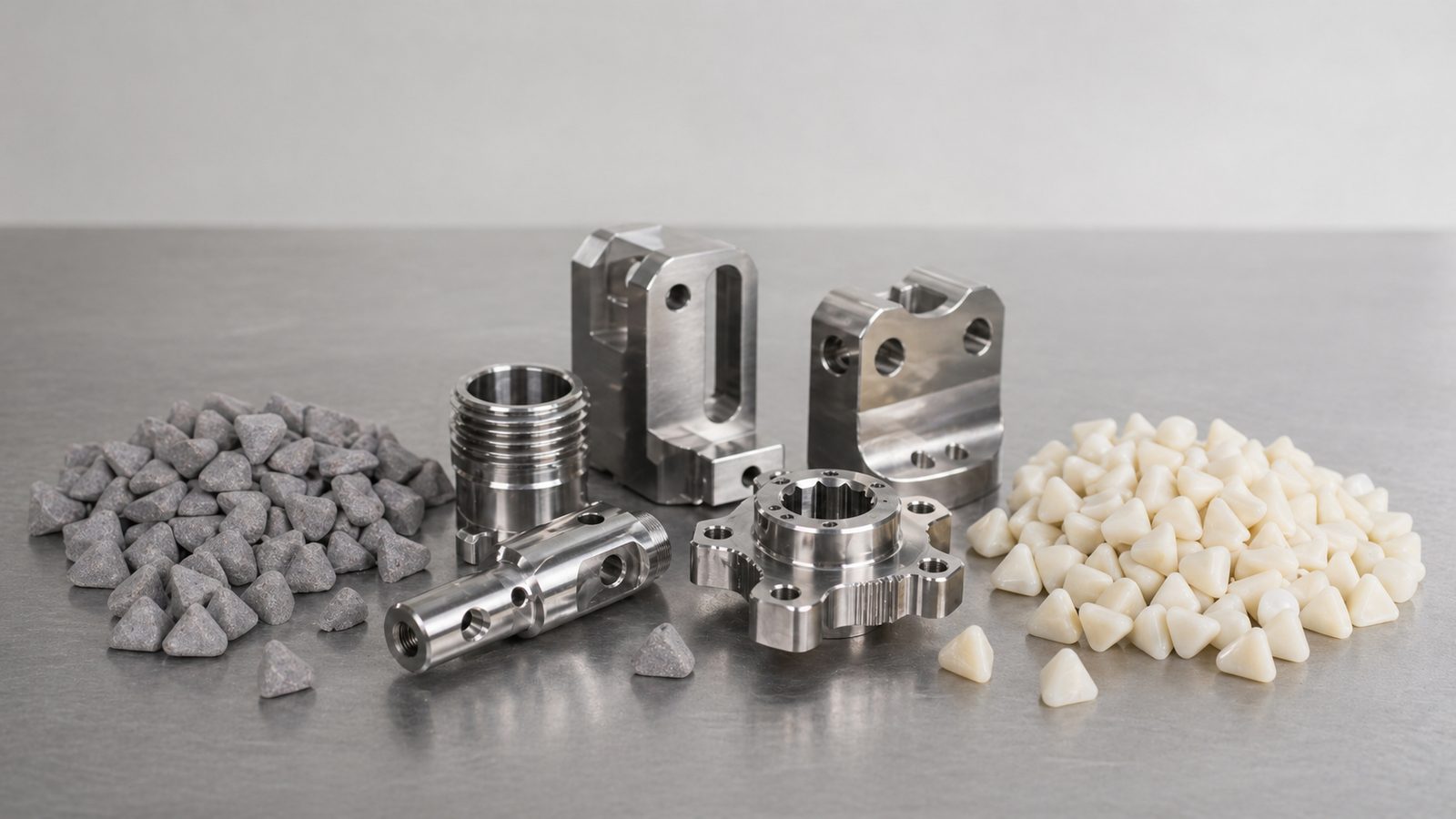
Ceramic media and plastic media with machined metal parts for mass finishing selection
Quick answer: Ceramic media is usually better for stronger cutting, deburring, and edge breaking. Plastic media is usually better for softer metals, delicate parts, pre-polishing, and reducing part-on-part damage. The final choice should also consider media shape, media size, part holes, surface target, and sample testing results.

What Is Ceramic Media?

Ceramic media is a dense tumbling media made with abrasive materials bonded into different shapes, such as triangles, cylinders, angle cuts, cones, and balls. Because it is harder and heavier than plastic media, it usually provides stronger cutting action.

Ceramic media is often used when parts need burr removal, edge radiusing, oxide removal, scale removal, or general surface smoothing before further polishing, coating, plating, or assembly.

Common ceramic media advantages

  • Good cutting strength for medium to heavy burrs.
  • Long service life compared with many softer media types.
  • Suitable for steel, stainless steel, iron, copper, brass, and many cast parts.
  • Available in many shapes and sizes for different part geometries.
  • Works well in many vibratory finishing machine applications.

What Is Plastic Media?

Plastic media is lighter than ceramic media and is commonly used for softer metals or parts that need a gentler finishing action. It is often selected for aluminum, zinc alloy, brass, magnesium alloy, and die-cast components where aggressive media may cause dents, peening, or excessive edge rounding.

Plastic media is also useful when the goal is to create a smoother pre-polish surface instead of only removing heavy burrs.

Common plastic media advantages

  • Gentler action on soft metals and decorative parts.
  • Lower risk of part-on-part damage compared with heavier media.
  • Good for aluminum die castings, zinc alloy parts, and precision machined parts.
  • Useful for pre-polishing and surface smoothing before final finishing.
  • Available in cone, pyramid, wedge, and other shapes for complex surfaces.
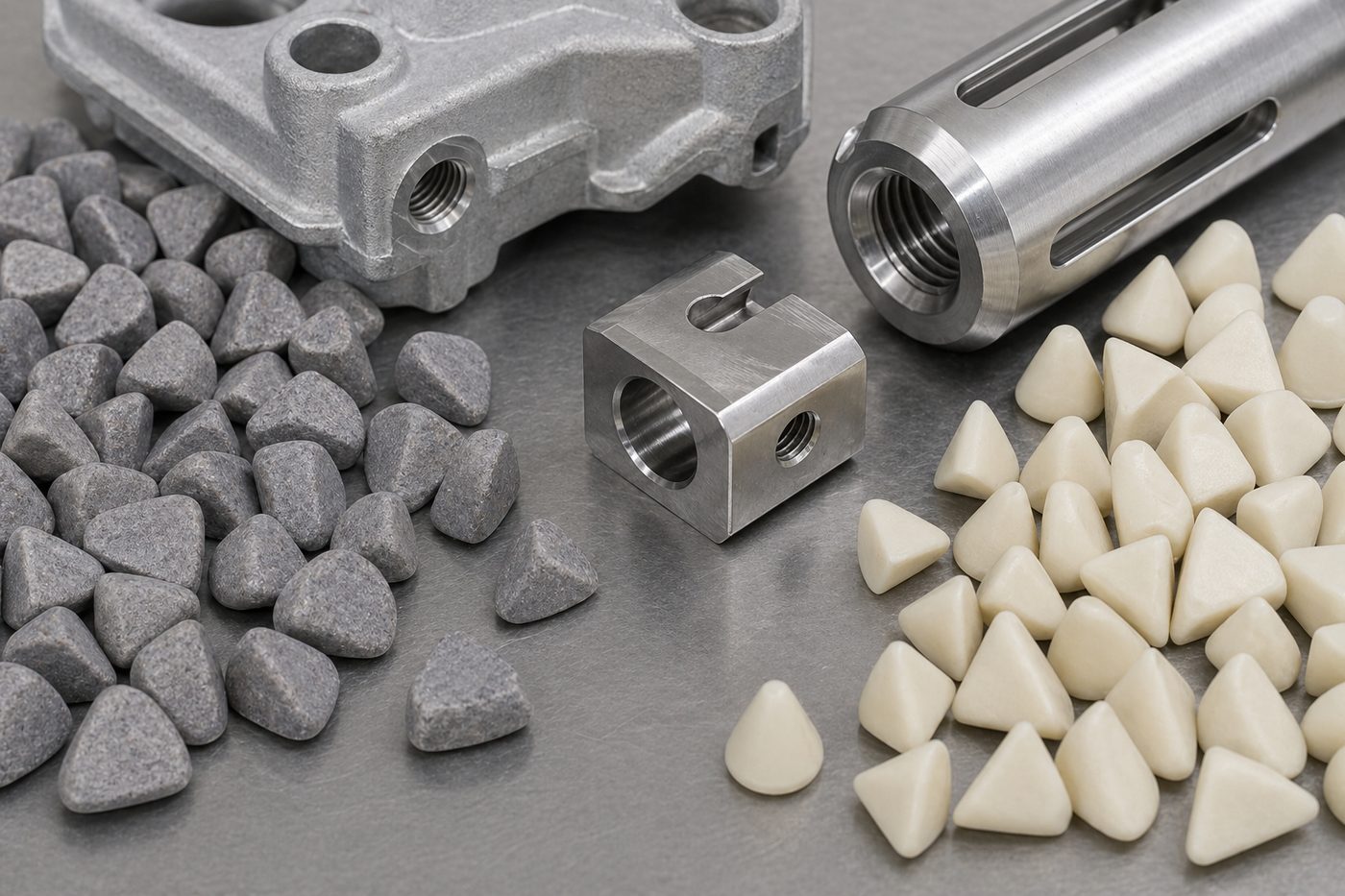
Close-up comparison of ceramic tumbling media and plastic tumbling media with machined metal parts
Ceramic media normally provides stronger cutting, while plastic media is often used for softer materials and more controlled surface finishing.

Ceramic Media vs Plastic Media Comparison

Factor Ceramic Media Plastic Media
Cutting strength Medium to strong cutting action Light to medium cutting action
Media weight Heavier, more impact force Lighter, gentler on parts
Best for Steel, stainless steel, iron, harder alloys, cast parts Aluminum, zinc alloy, brass, magnesium alloy, softer metals
Typical purpose Deburring, edge breaking, scale removal, surface smoothing Pre-polishing, light deburring, surface refinement, damage reduction
Risk May be too aggressive for delicate or soft parts May be too slow for heavy burrs or hard materials
Surface result More cutting marks if aggressive grades are used Smoother, more controlled surface before polishing

How to Choose the Right Media

A good media choice starts with the part, not with the media catalog. Before selecting a media type, check the material, part size, burr size, surface target, hole dimensions, slot width, and whether the part can tolerate impact.

Choose ceramic media when...

  • The burr is medium or heavy.
  • The material is harder or more wear-resistant.
  • You need edge breaking before coating or assembly.
  • Cycle time must be efficient for batch production.

Choose plastic media when...

  • The part is aluminum, zinc alloy, or another softer metal.
  • The surface must avoid dents or heavy impact marks.
  • You need light deburring or pre-polishing.
  • The part has decorative or visible surfaces.

Do Not Ignore Media Shape and Size

Media material is only one part of the decision. Shape and size can be just as important. A good media should reach the surface that needs finishing, but it should not lodge inside holes, threads, slots, or blind cavities.

For parts with complex geometry, test different shapes before mass production. Triangle media may work well for corners and flat surfaces, while cone or pyramid media may reach different edges. Rounder shapes may reduce lodging risk in some parts, but may not cut as efficiently in narrow areas.

Machine and Compound Also Affect the Result

The same media can behave differently in different machines. A standard vibratory bowl, tub vibrator, barrel finishing machine, or centrifugal finishing system can all create different contact patterns between parts and media.

Finishing compounds also matter. They help clean the surface, control foam, improve lubrication, suspend removed particles, and stabilize the finishing process. If compound concentration or water flow is wrong, even the correct media may produce unstable results.

Common Selection Mistakes

  • Choosing ceramic media only because it cuts faster, even when the part is soft or easily damaged.
  • Choosing plastic media for heavy burrs that actually require stronger cutting action.
  • Ignoring holes, slots, threads, and internal cavities before choosing media size.
  • Using one media type for every material and every part shape.
  • Judging the process only by surface appearance without checking cycle time, lodging, separation, and manual rework.

Recommended Testing Method

For a new part, sample testing should compare at least two or three media options. The test should measure burr removal, edge condition, surface uniformity, part damage, media lodging, separation efficiency, and total cycle time.

A typical starting range may include different media materials, shapes, and sizes. Final settings should be tested with sample parts because small changes in part geometry can completely change the result.

Related Solutions

If you are comparing media for a real production project, these pages can help you review equipment and consumables:

Need Help Choosing Tumbling Media?

Send us your part material, size, burr condition, current surface, target finish, and production quantity. JINTAIJIN can help recommend suitable ceramic media, plastic media, compounds, and a sample testing process for your parts.

Contact our finishing team for media selection support

#+86-592-2381506

Eメール : info@surface-polish.com

本社住所 : No. 31, Xinchang Road, Xinyang Industrial Zone, Haicang District, Xiamen

メッセージを残すにはここをクリックしてください

伝言を残す
当社の製品に興味があり、詳細を知りたい場合は、ここにメッセージを残してください.できるだけ早く返信します.

製品

whatsapp

コンタクト